Disk imaging and benchmarks for Windows and Mac
The disk itself: how fast it reads and writes, whether its partition table agrees with itself, and where the surface is struggling.
4 programs, free while we’re in preview. One file each. No account, no installer, nothing to uninstall.
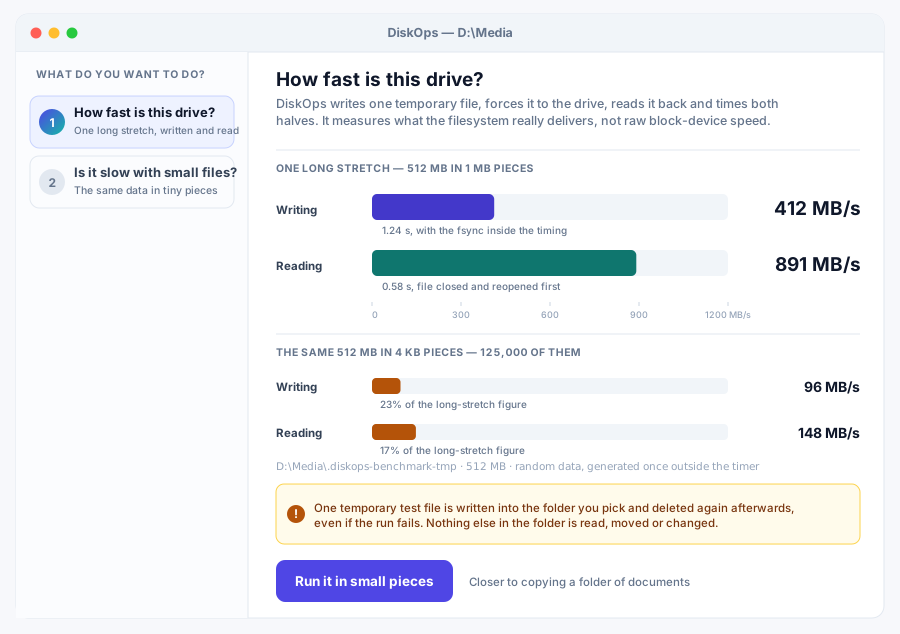

Writes 256 MB, fsyncs it, reads it back. Two numbers in MB/s.
The Simple one of the 4: it keeps the settings to a minimum and picks sensible defaults for you, so there is almost nothing to learn before it is useful.
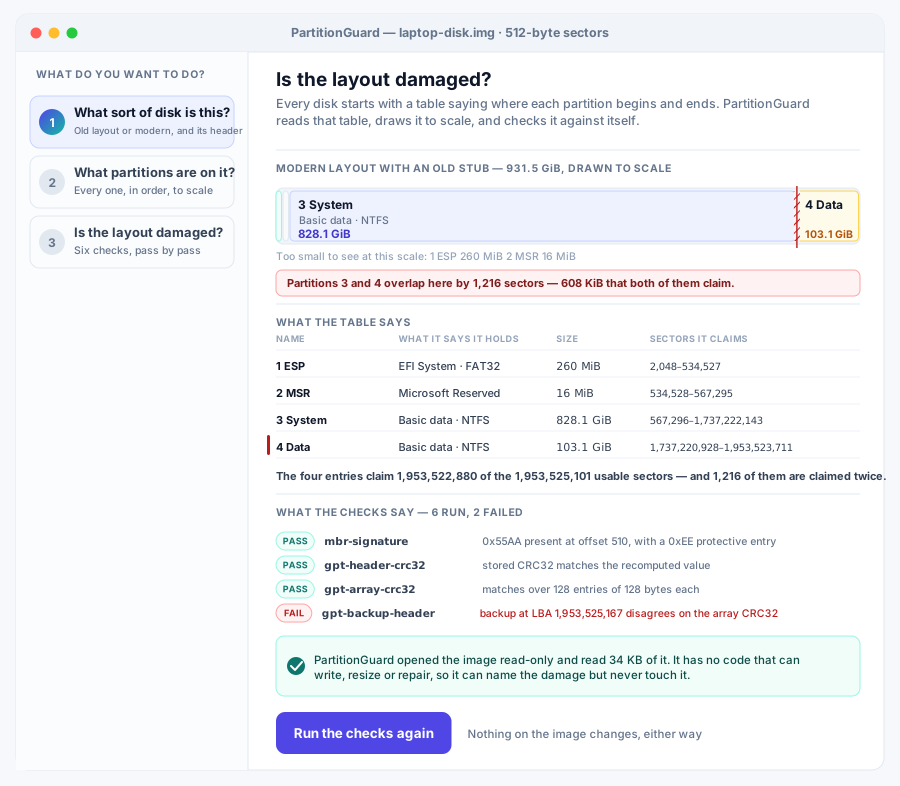

Reads a disk image's partition table and checks whether it contradicts itself.
The Vertical one of the 4: it is tuned for that work specifically, with presets and reports built around it rather than every setting under the sun.
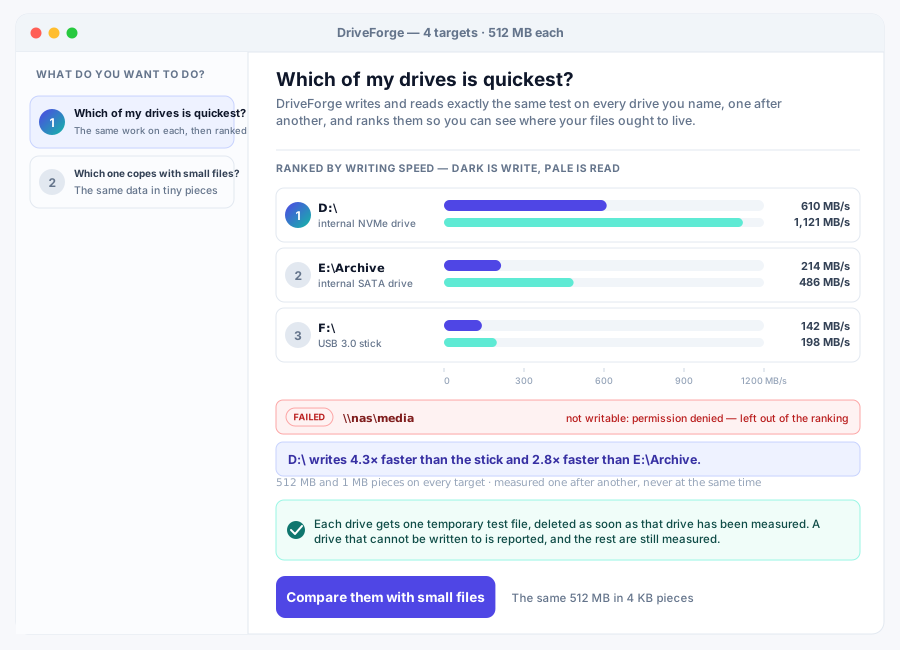

Benchmark several drives against each other, same settings for every one.
The Pro one of the 4: it adds the deeper settings and finer control that people who use it every day ask for, without getting in the way on a quick job.
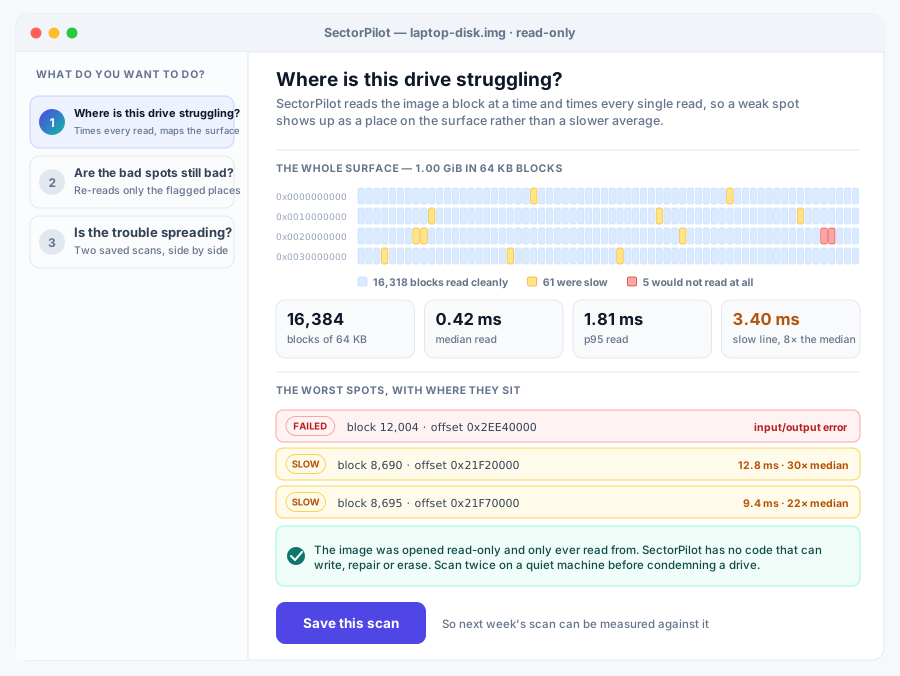

Times every block of a disk image and maps which ones are struggling.
The Team one of the 4: it adds what a team needs: command-line control for scripts, settings you can roll out across machines, and a record of everything that ran.
Reading on this job
- How to tell whether a drive is failing A dying drive is usually not slow everywhere. It is slow in one region, and normal in the rest, which is why an overall speed test can look fine right up until it doesn't.
What every program in this group guarantees
- Nothing is deleted. Anything a program removes is moved somewhere you can get it back from, and anything that changes files shows you the whole plan before it touches one.
- Nothing is reported back to us. No program here signs you in, phones home or counts what you did. The ones that use the network at all use it because that is the job, fetching a file you asked for, reaching a machine you named, and nowhere else.
- One file. Download it and run it. There is no installer, no runtime to fetch and nothing left behind if you delete it.
- The window and the command line are the same program. Double-click it for the window; give it arguments and the same binary runs as a command-line tool.
- The source is published for every program here, next to the download.
Looking for something else? Browse all 100 programs or see what a plan covers.